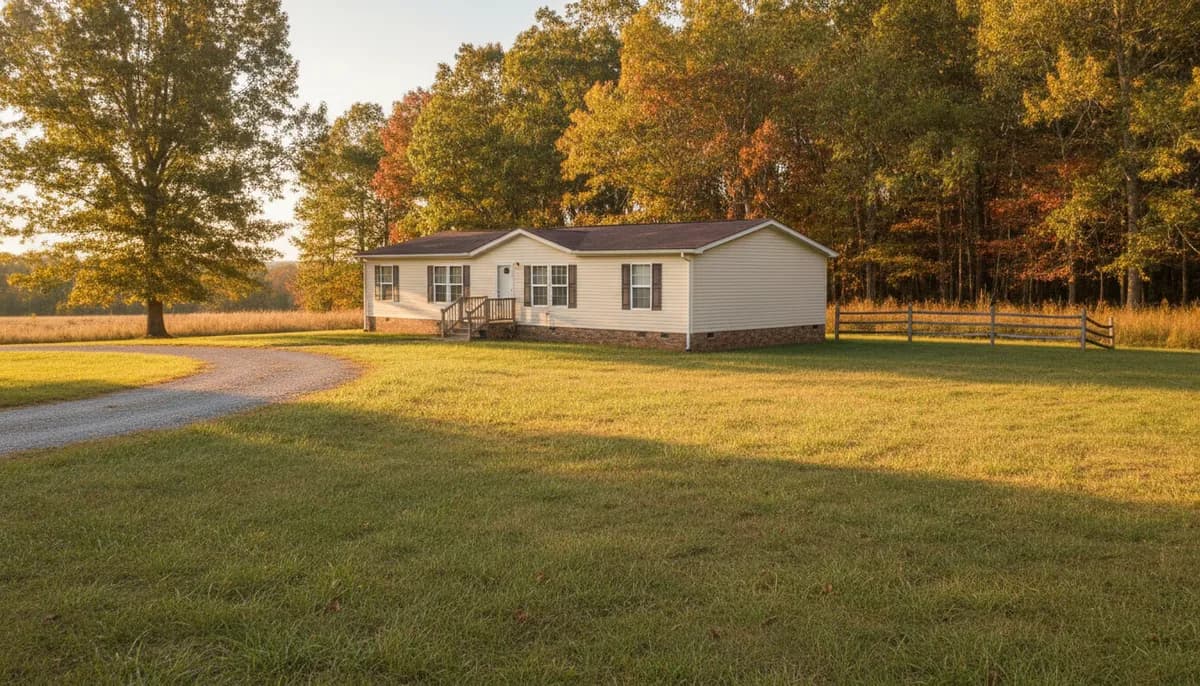
Two people own similar manufactured homes twenty minutes apart in Virginia. One gets a single annual real estate bill. The other gets a real estate bill for the land and a separate personal property bill for the home. Neither understands why theirs looks different from the other.
The answer is usually not that one locality is stricter. It is that the two homes have different legal status, and the tax bill is the clearest everyday evidence of which status you have.
The two treatments
Manufactured home still titled through DMV. The home is personal property. Virginia localities generally assess and bill it separately from the land. If you rent your lot, you get a bill for the home only. If you own the land, you typically get a real estate bill for the land and a separate assessment for the home.
Manufactured home converted to real property. Once the title is surrendered and the affidavit of affixation is recorded under Code of Virginia section 46.2-653.1, the home is deemed real estate. From then on it is assessed as part of the real property, and there is no separate personal property assessment for the home.
This is why your tax bill is such a useful diagnostic. If there is a separate line for the manufactured home, it is almost certainly still titled. If the only assessment is land and improvements together, the conversion probably happened. Our guide on telling titled from real property covers the other two checks.
Why the amounts vary so much between localities
Virginia is a locality-driven tax state. Cities and counties set their own rates, run their own assessment cycles, and apply their own depreciation approaches to personal property.
That produces genuine variation in:
- The rate applied. Real estate rates and personal property rates are set separately by each locality, and neither is uniform across Virginia.
- How value is determined. Localities use different valuation approaches for manufactured homes, and some rely on published guides while others use their own schedules.
- How fast value declines with age. Depreciation treatment varies, which is why two similar homes of different ages can be assessed very differently in the same county.
- Reassessment frequency. Real estate reassessment cycles differ by locality, so a converted home may go years between changes in assessed value.
Rather than quote figures that go out of date, the reliable move is to check your own locality directly. Every Virginia city and county has a Commissioner of the Revenue or equivalent office that publishes current rates and can explain how manufactured homes are assessed locally. That office is also who you contact if you think an assessment is wrong.
What this means when you sell
Three practical consequences.
Prorating at closing. Taxes are typically prorated between seller and buyer. Knowing whether the home is billed as personal property or folded into the real estate assessment determines what actually gets prorated and how.
Outstanding balances. Unpaid taxes generally have to be resolved at closing. If you have been carrying an unpaid personal property balance on the home, that comes out of proceeds. Worth knowing the figure before you negotiate, not after.
Buyer financing. A buyer pursuing a mortgage on a converted home will see the real estate assessment. A buyer using a chattel loan on a titled home is in a different lending category entirely. Our guide on financing options covers what each path means for your buyer pool.
The situation that catches inherited homes
When an owner dies, the tax bills keep coming.
If the home is on a rented lot, the estate is often carrying lot rent, personal property tax and insurance simultaneously on a home nobody is living in. Those costs accumulate against whatever the heirs eventually receive, and they accumulate during exactly the period when nobody yet has authority to sell. Our article on selling an inherited home covers how to shorten that window.
If the home was converted to real property, the estate is carrying real estate tax on land and home together, which is usually a larger number.
Either way, the bill does not pause for probate.
The mismatch worth catching early
Occasionally the tax records and the title records disagree.
The most common version: an owner started the conversion, surrendered the DMV title, and never filed the affidavit of affixation. The locality may or may not have updated its assessment. You end up with a home that has no title, no recorded affixation, and a tax treatment that reflects one status or the other more or less by accident.
This is entirely fixable, but it has to be fixed before a closing attorney will move a sale forward. Finding it while you are not under contract is much easier than finding it while a buyer's financing clock is running.
How to check: pull your most recent tax bill, then check whether a DMV title still exists in your name, then search your circuit court's land records for an affidavit of affixation against your parcel. If those three do not tell a consistent story, that is the thing to resolve first.
Where to get authoritative answers
For your specific assessment, rate, and payment status, contact the Commissioner of the Revenue or Treasurer in the city or county where the home sits. They can tell you exactly how the home is currently classified in their records, which is the fastest way to confirm its status.
For questions about converting, or about a title and assessment that disagree, a Virginia real estate attorney is the right call.
If the paperwork is the reason you have not sold
We buy manufactured homes throughout Virginia, including homes with unpaid tax balances, missing titles, unreleased liens, and conversions that were started and never finished. Those are not deal-breakers on our side, they are just things that have to be worked through.
If your situation is tangled and you want a straight read on it, tell us what you are looking at and we will tell you what we see, including when the answer is that you would do better sorting the paperwork and listing it on the open market.
This article is general information about how Virginia localities tax manufactured homes. Rates, assessment methods and procedures vary by locality and change over time, and this is not tax or legal advice. Confirm current details with your local Commissioner of the Revenue.
Sources: Code of Virginia section 46.2-653.1; Virginia Department of Taxation; Virginia DMV